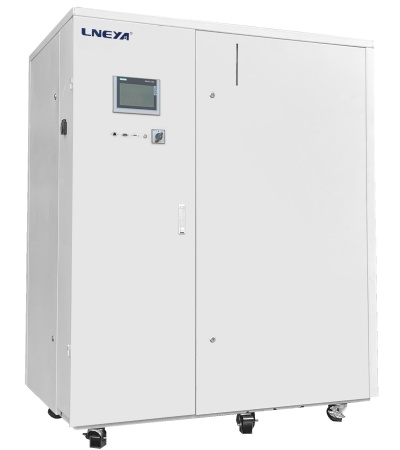
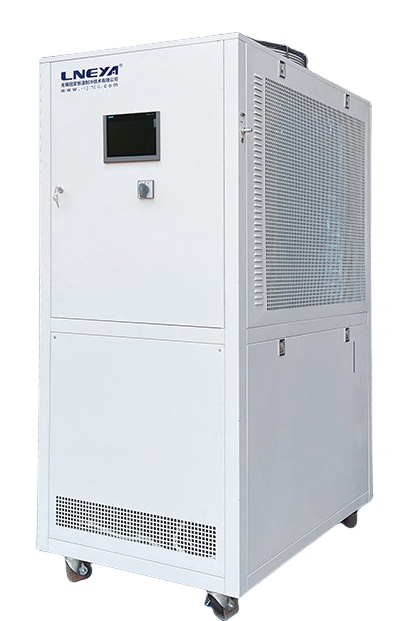
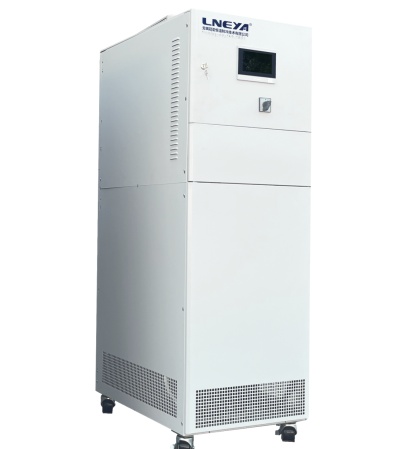
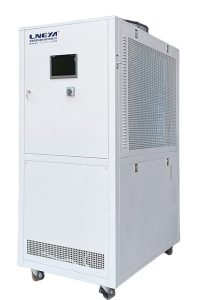
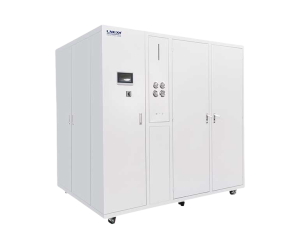
7-ton chillers are significant in the HVAC industry, offering a balance between capacity and efficiency for a wide range of applications. This article delves into the performance characteristics, aplications, market trends, technological advancements, and environmental considerations of 7-ton chillers.
Performance and Specifications:
7-ton chillers, such as the MG-7.5A model from Advantage Engineering, provide 7.2 tons of cooling capacity and 25.8 kW of power. These chillers feature scroll compressors and air-cooled condensers, with an air flow rate of 10,000 CFM. The use of R-410A as a refrigerant indicates a low global warming impact and non-ozone depleting properties, aligning with environmental sustainability goals.
Applications:
7-ton chillers are used in various industries. In the semiconductor industry, they are crucial for maintaining consistent temperatures during production processes. They are also used in industrial processes for cooling machinery and equipment, preventing overheating, and maintaining optimal operating conditions. Additionally, 7-ton chillers find applications in pharmaceuticals and chemical industries for temperature control in reactions and processes.
Market Trends:
The market for 7-ton chillers is influenced by the demand for energy-efficient cooling solutions. Chillers with variable frequency drives (VFDs) are becoming more popular as they match motor speed with cooling requirements, reducing power usage and operating costs. The market is also moving towards more environmentally friendly refrigerants, with a shift from high-GWP refrigerants to those with lower environmental impact.
Technological Developments:
Technological advancements in 7-ton chillers include the use of VFDs for energy efficiency and improvements in heat exchanger designs for better performance. The development of microchannel heat exchangers has improved heat transfer efficiency and reduced the required flow rate, enhancing the overall performance of chillers.
Environmental Impact:
The environmental impact of 7-ton chillers is a significant consideration, with a focus on using refrigerants with lower GWP. R-410A, used in many chillers, has a GWP of 2,088, which is lower than many other refrigerants, making it a more environmentally friendly choice. However, there is a global trend towards even lower GWP refrigerants, which may influence the future development and adoption of chiller technologies.
Conclusion:
7-ton chillers play a vital role in various industrial applications, offering a balance between cooling capacity and energy efficiency. As the market continues to evolve, driven by environmental regulations and technological advancements, the demand for 7-ton chillers with lower environmental impact and higher efficiency is expected to grow. Understanding the performance characteristics, applications, and market trends of 7-ton chillers is crucial for stakeholders in the HVAC industry as they navigate the changing landscape of cooling technology.
A water-cooled chiller unit is a vital component in industrial and commercial HVAC systems, providing precise temperature control by circulating chilled water. This article delves into the inner workings of water-cooled chillers, their advantages over air-cooled counterparts, and their applications in various settings. It outlines the key components, including the evaporator, compressor, condenser, and expansion valve, and discusses the importance of maintenance for optimal performance and longevity. The article aims to offer a comprehensive understanding of water-cooled chiller units for professionals in the HVAC industry.
A chiller evaporator is a critical component within refrigeration systems where heat absorption occurs, facilitating the refrigerant's transition from liquid to gas by absorbing heat from the environment to be cooled. It operates under low pressure, enabling the refrigerant to evaporate and draw latent heat, resulting in a chilled coil that serves as the cooling interface. Types include bare tube coil, plate, shell and coil, finned tube, shell and tube, and tube-in-tube evaporators, each designed for specific heat transfer applications. The effectiveness of the evaporator is paramount for maintaining desired temperatures and system efficiency.
Chiller products are essential in various industries for temperature regulation and process control. This article provides an overview of chiller systems, including their types, applications, and the importance of selecting the right chiller based on cooling capacity and efficiency. It also discusses the latest advancements in chiller technology, top brands in the market, and the significance of proper maintenance for ensuring efficiency and longevity of chiller systems。
Industrial process cooling refers to the methods and systems used to remove excess heat from industrial processes to maintain optimal operating temperatures. This is crucial for ensuring product quality, equipment longevity, and process efficiency. The systems typically involve cooling towers, chillers, and heat exchangers, and are designed to handle the specific cooling demands of various industries such as manufacturing, food and beverage, and pharmaceuticals. The market for industrial cooling systems is growing, driven by the need for energy efficiency and environmental sustainability. This article explores the importance, applications, and technological advancements in industrial process cooling systems.
 Industrial Chiller Heater Equipment Supplier-LNEYA