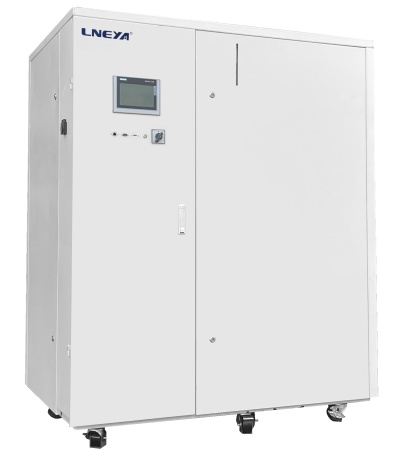
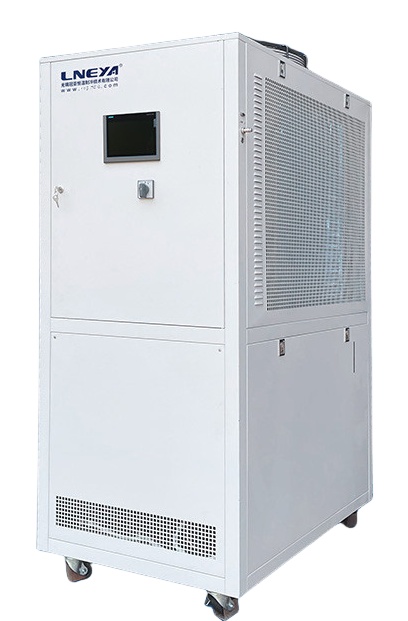
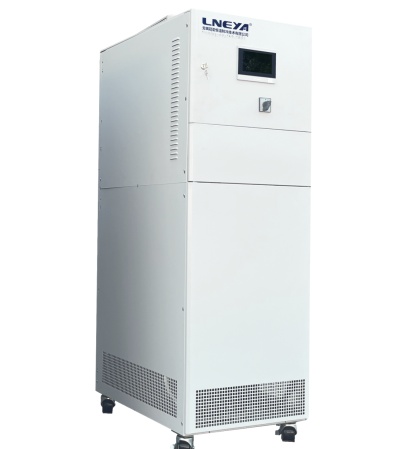
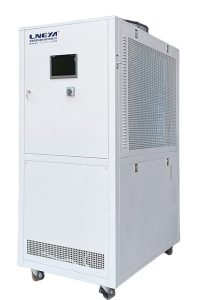
A water chiller for laser cutting machines is a critical component designed to maintain optimal operating temperatures for the laser system’s most sensitive parts, including the laser tube, focusing lens, and reflecting mirrors. Laser cutting generates significant heat—especially in high-power machines— and without proper cooling, components can overheat, leading to reduced laser power, distorted cutting patterns, or even permanent damage. These chillers circulate a continuous flow of chilled water through the laser’s cooling circuit, absorbing excess heat and dissipating it to the environment, ensuring the laser operates within a safe temperature range (typically 15–25°C). This precision cooling directly impacts cutting accuracy, machine lifespan, and energy efficiency, making the water chiller an indispensable part of any laser cutting setup.
The working principle of a water chiller for laser cutting machines involves a closed-loop system that efficiently transfers heat from the laser components to the surrounding environment. Here’s a detailed breakdown: The chiller’s pump draws water from an internal reservoir and circulates it through hoses connected to the laser cutting machine’s cooling circuit. This water flows around the laser tube (where the laser beam is generated) and across the lens and mirrors (which focus and direct the beam), absorbing heat generated during operation. As the now-warm water returns to the chiller, it passes through an evaporator. Inside the evaporator, the warm water comes into contact with a cold refrigerant. The refrigerant absorbs heat from the water, causing the water to cool down. The chilled water is then pumped back to the laser machine, completing the cooling cycle. Simultaneously, the refrigerant—heated by the water—flows to a condenser. In air-cooled chillers, a fan blows ambient air over the condenser coils, dissipating the heat into the environment. In water-cooled chillers, an external water source circulates through the condenser, carrying the heat away. The cooled refrigerant then passes through an expansion valve, which reduces its pressure, lowering its temperature further before it re-enters the evaporator to repeat the process. A built-in temperature controller monitors the water temperature, typically using a thermistor or RTD sensor. If the water temperature rises above the setpoint (usually 20°C), the controller activates the refrigeration system. Once the temperature drops to the desired level, the system shuts off temporarily to save energy, restarting as needed to maintain stability. Water chillers for laser cutting machines come in two main types, each suited to different operating environments and machine requirements: Air-cooled water chillers are the most common choice for small to medium laser cutting machines (up to 150 watts). They use a fan to cool the condenser, eliminating the need for an external water source. This makes them easy to install and ideal for workshops with limited space or access to water. Air-cooled chillers are generally more affordable and require less maintenance than water-cooled models, though they are slightly less efficient in high-temperature environments (above 30°C) due to reduced heat dissipation from the condenser. They are compact, portable, and well-suited for hobbyist or light industrial use. Water-cooled water chillers are designed for high-power laser cutting machines (150 watts and above), which generate more heat. They use an external water supply (e.g., a tap or cooling tower) to cool the condenser, offering higher cooling efficiency and better performance in warm workshops. Water-cooled chillers can handle larger heat loads, making them suitable for industrial-grade laser cutters used in manufacturing or heavy-duty cutting applications. However, they require a constant water source and additional plumbing, increasing installation complexity and cost. They also need water treatment to prevent mineral buildup in the condenser, which can reduce efficiency over time.
Both types can feature additional components tailored to laser cutting, such as flow switches (which shut down the laser if water flow is insufficient, preventing overheating), pressure gauges (to monitor water flow), and UV sterilizers (to prevent algae growth in the water circuit, which can clog hoses or damage laser components). Several key features distinguish high-quality water chillers for laser cutting machines, directly impacting their performance and compatibility with different laser systems: Cooling capacity (measured in watts or British thermal units per hour, BTU/h) is the most critical feature, as it must match the laser’s heat output. Laser power directly correlates with heat generation: a 50-watt laser typically requires a chiller with 500–800 watts of cooling capacity, while a 1000-watt industrial laser may need 10,000+ watts. Choosing a chiller with insufficient cooling capacity leads to overheating, while an oversized chiller wastes energy and increases costs. Temperature control precision ensures the laser operates within a narrow range. Most chillers maintain temperatures within ±1°C of the setpoint, though high-end models offer ±0.5°C precision. This stability is crucial because even small temperature fluctuations can affect the laser beam’s intensity and focus, leading to uneven cuts or reduced material penetration. Flow rate (measured in liters per minute, LPM) determines how quickly heat is removed from the laser components. The chiller’s flow rate must match the laser manufacturer’s specifications—too low, and heat accumulates; too high, and it may damage delicate parts like the laser tube. Typical flow rates range from 1–3 LPM for small lasers to 5–10 LPM for large industrial models. Many chillers feature adjustable flow rates to accommodate different machines. Water tank capacity affects how long the chiller can operate without refilling (for air-cooled models with internal reservoirs). Larger tanks (5–20 liters) reduce the frequency of refills, ideal for extended cutting sessions, while smaller tanks (2–5 liters) make the chiller more compact. Some models include low-water level sensors that alert users when refilling is needed, preventing dry operation. Safety features protect both the chiller and the laser. These include flow sensors that shut down the laser if water flow stops, high-temperature alarms that alert users to overheating, and pressure relief valves to prevent hose damage from excessive pressure. Overheat protection for the chiller’s compressor is also common, preventing damage if the condenser becomes blocked. Selecting the right water chiller for a laser cutting machine requires matching the chiller’s specifications to the laser’s requirements and operating conditions. Here are the key factors to consider: Laser power is the primary determinant of cooling capacity. As a general rule, the chiller’s cooling capacity (in watts) should be 10–15 times the laser’s power (in watts). For example, a 100-watt laser requires a chiller with 1000–1500 watts of cooling capacity. High-power lasers (500+ watts) may need chillers with additional features like dual compressors to handle peak heat loads during continuous cutting. Operating environment influences the choice between air-cooled and water-cooled models. Air-cooled chillers work best in well-ventilated workshops with ambient temperatures below 30°C. In hot or poorly ventilated spaces, water-cooled chillers are more reliable, as they are less affected by air temperature. Additionally, workshops with limited space may benefit from compact air-cooled models, while those with access to a water supply can leverage the efficiency of water-cooled systems. Flow rate requirements are specified by the laser manufacturer, and the chiller must meet or exceed this rate to ensure adequate heat removal. For example, a laser tube designed for 2 LPM will underperform with a chiller that only delivers 1.5 LPM, as heat will accumulate in the tube. Check the laser’s manual for the minimum flow rate and select a chiller with an adjustable pump that can match this specification. Temperature range is typically set by the laser manufacturer, with most recommending 15–25°C. The chiller must be able to maintain this range consistently, even during long cutting sessions. Models with PID (proportional-integral-derivative) controllers offer better temperature stability than basic on-off controllers, making them suitable for precision cutting applications (e.g., cutting thin metals or intricate designs).
Water quality is critical, as impurities can damage laser components. Chillers used with glass laser tubes (common in low-power machines) require deionized or distilled water to prevent mineral deposits that can block the tube or reduce laser efficiency. Some chillers include built-in water filters or ion exchange resins to purify the water, extending the life of both the chiller and the laser. For high-power lasers with metal components, anti-corrosion additives may be necessary to prevent rust in the cooling circuit. Portability and size matter for workshops with multiple laser machines or limited space. Compact, lightweight air-cooled chillers with handles or casters are easy to move between machines, while stationary water-cooled models are better suited for dedicated laser setups. Proper maintenance of a water chiller for laser cutting machines is essential to ensure consistent performance and extend the lifespan of both the chiller and the laser system. Regular water replacement prevents contamination and mineral buildup. For air-cooled chillers with internal reservoirs, replace the water every 2–4 weeks (more frequently in humid environments) using distilled or deionized water as recommended by the laser manufacturer. Add water treatment solutions (e.g., anti-algae or anti-corrosion additives) to prevent bacterial growth or mineral deposits, following the product instructions to avoid damaging the laser tube. Cleaning the condenser ensures efficient heat dissipation. For air-cooled chillers, clean the condenser coils monthly using compressed air or a soft brush to remove dust and debris, which can block airflow and reduce cooling efficiency. A dirty condenser forces the compressor to work harder, increasing energy consumption and risking overheating. For water-cooled chillers, flush the condenser quarterly with a descaling solution to remove mineral deposits from the external water supply, which can insulate the coils and reduce heat transfer. Checking flow rate and pressure ensures the chiller is delivering adequate cooling to the laser. Use the chiller’s built-in pressure gauge or a flow meter to verify that the flow rate matches the laser’s requirements. A sudden drop in flow rate may indicate a clogged filter, kinked hose, or failing pump—address these issues promptly to prevent laser damage. Inspecting hoses and connections for leaks or wear is important, as even small leaks can reduce water flow and cause the laser to overheat. Check hoses monthly for cracks, bulges, or loose fittings, replacing damaged hoses with high-temperature, pressure-rated alternatives. Ensure connections to the laser are secure but not over-tightened, as excessive force can damage the laser’s cooling ports. Calibrating the temperature controller ensures accurate temperature regulation. Every 6 months, compare the chiller’s displayed temperature to a calibrated thermometer placed in the water reservoir. If there is a discrepancy of more than 1°C, adjust the controller according to the manufacturer’s instructions or contact a technician for recalibration. Servicing the compressor and pump extends their lifespan. Listen for unusual noises (e.g., rattling or grinding) which may indicate worn bearings or impellers. For air-cooled chillers, ensure the condenser fan is working properly—replace the fan motor if it fails to spin freely. Lubricate pump bearings as recommended by the chiller manufacturer (for non-sealed pumps) to prevent friction and overheating. The impact of a water chiller on laser cutting quality and machine performance is significant and multifaceted. Consistent laser power is maintained through stable temperatures: overheating causes the laser tube to expand, altering the beam’s path and reducing power output, resulting in uneven cuts (e.g., deeper cuts in some areas and shallow cuts in others). A properly sized chiller ensures the tube remains at a constant temperature, preserving beam intensity and cutting consistency. Prolonged component lifespan is another key benefit. Laser tubes, lenses, and mirrors degrade quickly when exposed to excessive heat—an uncooled laser tube may last only a few hundred hours, while one with proper cooling can operate for thousands of hours. Similarly, overheated lenses can crack or lose their anti-reflective coating, increasing maintenance costs. By maintaining optimal temperatures, the chiller reduces the frequency of component replacements and downtime. Energy efficiency is improved, as a cool laser system operates more efficiently than an overheated one. Overheating causes the laser power supply to work harder to maintain output, increasing energy consumption. A chiller ensures the laser operates at peak efficiency, reducing electricity costs over time. Reduced downtime results from fewer breakdowns. Overheating is a leading cause of laser cutting machine failures, often requiring costly repairs and lengthy downtime. A well-maintained chiller prevents these issues, ensuring the machine is available for production when needed. In conclusion, a water chiller is an essential accessory for laser cutting machines, playing a critical role in maintaining temperature stability, protecting sensitive components, and ensuring high-quality cuts. By understanding the types of chillers available, selecting the right model for the laser’s power and operating environment, and following proper maintenance practices, users can maximize the performance and lifespan of their laser cutting system. Whether for hobbyist projects or industrial manufacturing, the water chiller’s contribution to precision, efficiency, and reliability makes it a key investment in any laser cutting setup.
Temptronic Thermostream is a specialized thermal test equipment renowned for its precise temperature control capabilities. This article provides a detailed exploration of it. It commences with an explanation of the working principle, which involves advanced heating and cooling mechanisms to generate rapid and accurate temperature changes. The unique features, such as high - speed temperature ramping and tight temperature accuracy, are elaborated. Its applications span multiple industries like electronics for component testing, automotive for evaluating part durability, and aerospace for ensuring equipment reliability. A comparison with other thermal test devices highlights its advantages. Maintenance tips are also provided to guarantee its long - term optimal performance.
Heating and cooling with water is a sustainable method for temperature regulation in buildings, utilizing hydronic systems for efficient climate control. This article examines the principles of water-based HVAC systems, their advantages over traditional air-based systems, and the factors that influence their performance and efficiency. It also discusses the role of smart controls in optimizing energy use and the importance of maintaining ideal heating and cooling temperatures for comfort and health. The article provides a comprehensive overview of water-based systems for professionals in sustainable building practices.
Glycol heaters are essential for maintaining the fluidity and performance of glycol - based solutions across diverse applications. This article offers an in - depth exploration of glycol heaters. It begins by explaining their fundamental working principles, including how they transfer heat to glycol fluids. Different types, such as electric, gas - fired, and immersion glycol heaters, are introduced, along with their unique features and ideal usage scenarios. Key factors for selection, including heating capacity, fluid compatibility, and energy efficiency, are thoroughly discussed. Additionally, practical guidance on installation, operation, and maintenance is provided, enabling users to make informed decisions and ensure the optimal performance of glycol heating systems.
Industrial water chiller units are essential cooling systems designed to regulate temperatures in various industrial processes, ensuring efficiency and reliability. This article provides a comprehensive overview of industrial water chiller units, including their functionality, types, applications, and benefits. Key points covered include:
Functionality: How industrial water chiller units work to maintain precise temperature control by circulating chilled water.
Types: Different types of chillers, such as air-cooled, water-cooled, and centrifugal systems, and their specific use cases.
Applications: Common uses in manufacturing, chemical processing, food production, and HVAC systems.
Benefits: Advantages like energy efficiency, scalability, precise temperature control, and enhanced process reliability.
By understanding these aspects, users can make informed decisions about selecting and utilizing industrial water chiller units for their specific needs.
 Industrial Chiller Heater Equipment Supplier-LNEYA