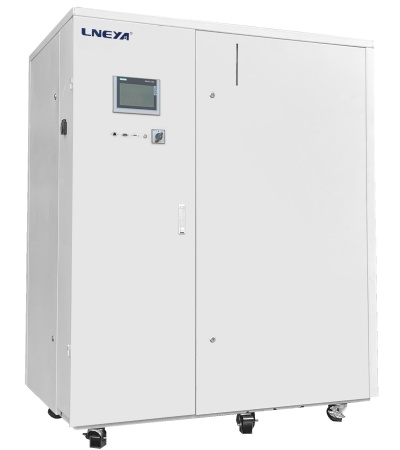
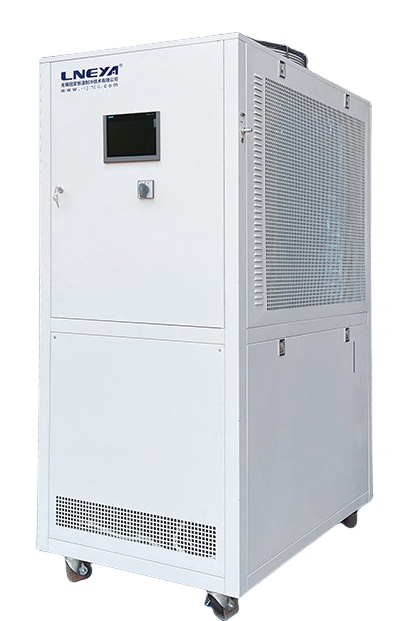
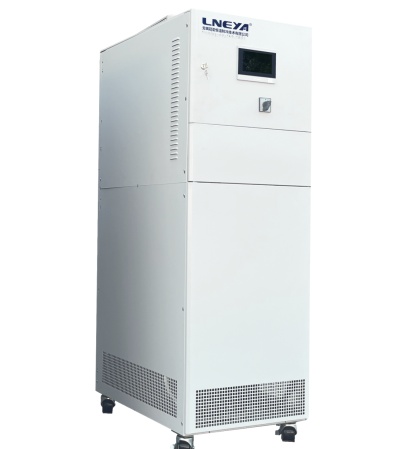
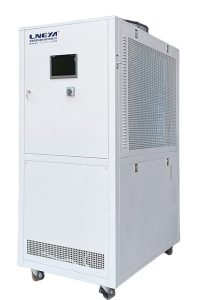
Introduction A temperature controlled water circulator, also known as a water bath circulator or temperature – regulated water circulation system, is a device designed to circulate water at a precisely controlled temperature. It is widely used in various fields due to its ability to provide stable and accurate temperature conditions, which are essential for many processes and experiments. This article will provide a detailed overview of temperature controlled water circulators, covering their working principles, types, applications, and key considerations when choosing one.
Working Principles Temperature Sensing At the core of a temperature controlled water circulator is the temperature sensing mechanism. Similar to other temperature control devices, it typically employs sensors such as thermocouples, thermistors, or resistance temperature detectors (RTDs). Thermocouples: These consist of two different metals joined at two points. When there is a temperature difference between the two junctions, a voltage is generated. This voltage is proportional to the temperature difference, allowing the thermocouple to measure the water temperature accurately. Thermocouples are known for their wide temperature range and relatively fast response time, making them suitable for applications where rapid temperature changes need to be monitored. Thermistors: Thermistors are semiconductor devices whose resistance varies with temperature. Negative temperature coefficient (NTC) thermistors decrease in resistance as the temperature rises, while positive temperature coefficient (PTC) thermistors show the opposite behavior. They are highly sensitive and can provide accurate temperature readings, often used in applications that require high – precision temperature control within a relatively narrow range. Resistance Temperature Detectors (RTDs): RTDs usually utilize a metal wire, commonly platinum, whose electrical resistance changes predictably with temperature. By measuring the resistance, the temperature of the water can be determined with high accuracy. RTDs offer excellent stability and linearity over a wide temperature range, making them a reliable choice for many industrial and scientific applications. Control Unit The temperature sensor sends the measured temperature data to the control unit. The control unit compares this real – time temperature with a pre – set target temperature. Based on the difference between the two, it decides whether to heat or cool the water and adjusts the operation of the relevant components accordingly. In a basic on – off control system, if the measured water temperature is lower than the set point, the control unit activates the heating element. Conversely, if the temperature is higher, it may initiate cooling measures, such as turning on a cooling fan or engaging a refrigeration system (in more advanced models). However, this simple on – off control can lead to temperature fluctuations around the set point. Advanced control units often use proportional – integral – derivative (PID) control algorithms. PID controllers continuously adjust the heating or cooling output based on three factors: the current error between the measured and set temperatures (proportional term), the accumulated error over time (integral term), and the rate of change of the error (derivative term). This results in more precise and stable temperature control, minimizing overshoot and undershoot and maintaining the water temperature within a very narrow tolerance range. Circulation Pump The circulation pump is responsible for moving the water through the system. It ensures that the water is evenly distributed and that heat is transferred efficiently throughout the circulator. The pump can be of different types, such as centrifugal pumps or peristaltic pumps. Centrifugal Pumps: These are the most commonly used pumps in water circulators. They work by using an impeller to create a centrifugal force that propels the water forward. Centrifugal pumps can generate high flow rates and are suitable for applications where a large volume of water needs to be circulated quickly. They are relatively simple in design, reliable, and cost – effective. Peristaltic Pumps: Peristaltic pumps operate by squeezing a flexible tube, causing the fluid inside to move forward in a series of discrete steps. They offer several advantages, including the ability to handle viscous fluids, prevent cross – contamination (since the fluid only comes into contact with the inside of the tube), and provide precise flow control. However, they generally have lower flow rates compared to centrifugal pumps and may be more expensive. Types of Temperature Controlled Water Circulators
Benchtop Water Circulators Benchtop water circulators are compact and designed for use on laboratory benches or small – scale industrial workstations. They are suitable for applications that require a relatively small volume of water circulation and moderate temperature control. Features: Benchtop models usually have a built – in water bath with a capacity ranging from a few liters to around 20 liters. They offer a temperature range typically from – 20°C to 200°C, although some advanced models can reach even lower or higher temperatures. They are equipped with digital displays for easy setting and monitoring of the temperature and often have a simple control interface. Many benchtop circulators also come with features like timer functions, allowing users to set the duration of operation, and over – temperature protection to prevent damage to the equipment and samples. Applications: These circulators are commonly used in laboratories for tasks such as heating or cooling samples during chemical reactions, enzyme assays, and biological experiments. They can also be used in small – scale manufacturing processes, like the production of certain pharmaceuticals or cosmetics, where precise temperature control of a small amount of liquid is required. Floor – Standing Water Circulators Floor – standing water circulators are larger and more powerful than benchtop models. They are designed for applications that require a large volume of water circulation and more robust temperature control capabilities. Features: They typically have a much larger water bath capacity, ranging from 20 liters to several hundred liters. The temperature range can be similar to benchtop models but may offer more precise control, especially in the extreme temperature ranges. Floor – standing circulators are often equipped with more powerful pumps to ensure high – flow rates and efficient heat transfer. They may also have advanced control systems, such as programmable logic controllers (PLCs), which allow for complex temperature profiles and multiple – stage operation. Additionally, they usually come with enhanced safety features, such as emergency stop buttons and leak detection systems. Applications: In industrial settings, floor – standing water circulators are used in processes like plastic injection molding, where they help to control the temperature of the molds to ensure consistent product quality. They are also essential in the food processing industry for heating or cooling large volumes of liquids, such as in the production of soups, sauces, and beverages. In research facilities, they can be used for large – scale experiments that require a significant amount of water at a precisely controlled temperature. Single – Loop and Multi – Loop Circulators Single – Loop Circulators: As the name implies, single – loop circulators have a single circuit for water circulation. They are suitable for applications where a single temperature control zone is sufficient. For example, in a simple laboratory experiment where only one sample needs to be maintained at a specific temperature, a single – loop circulator can provide the necessary temperature control. They are generally more cost – effective and easier to operate compared to multi – loop models. Multi – Loop Circulators: Multi – loop circulators, on the other hand, have multiple independent circuits for water circulation. Each loop can be controlled at a different temperature, allowing for more complex and diverse applications. In pharmaceutical manufacturing, for instance, different stages of the production process may require different temperatures, and a multi – loop circulator can meet these requirements simultaneously. They are also useful in research laboratories where multiple experiments with different temperature requirements need to be conducted at the same time. However, multi – loop circulators are more expensive and require more complex programming and maintenance. Applications of Temperature Controlled Water Circulators Laboratory Applications Chemical Experiments: In chemical laboratories, accurate temperature control is crucial for the success of many reactions. Temperature controlled water circulators are used to heat or cool reaction vessels to the required temperature. For example, in organic synthesis, reactions often need to be carried out at specific temperatures to ensure the formation of the desired products. The circulator provides a stable temperature environment, preventing unwanted side reactions and ensuring reproducibility of the results. Biological Research: In biological experiments, maintaining the right temperature is essential for the viability of biological samples and the proper functioning of enzymes and proteins. Water circulators are used in incubators, water baths for cell culture, and for heating or cooling reagents. For instance, when culturing mammalian cells, the temperature needs to be maintained at 37°C, and a temperature controlled water circulator can ensure that the cell culture environment remains stable, promoting cell growth and survival. Material Science: In material science research, temperature controlled water circulators are used to study the thermal properties of materials. They can be used to heat or cool samples to observe how the materials change in structure and properties at different temperatures. For example, when testing the melting point or glass transition temperature of polymers, the circulator provides a controlled heating or cooling rate to accurately determine these critical parameters. Industrial Applications Food and Beverage Industry: In the food and beverage industry, temperature controlled water circulators play a vital role in various processes. In cooking and pasteurization, they are used to heat liquids to the required temperature for a specific period to ensure food safety and quality. For example, in the production of fruit juices, the juice needs to be pasteurized at a certain temperature to kill harmful bacteria and extend the shelf life. In cooling processes, such as the production of ice cream or the cooling of cooked foods before packaging, the circulator helps to lower the temperature quickly and evenly.
Chemical Manufacturing: In chemical manufacturing plants, many processes require precise temperature control of reaction mixtures, solvents, and cooling water. Temperature controlled water circulators are used to regulate the temperature of reactors, heat exchangers, and condensers. They ensure that chemical reactions occur at the optimal temperature, improving product yield and quality. For example, in the production of pharmaceuticals, the synthesis of active ingredients often requires strict temperature control to obtain the correct chemical structure and purity. Plastic and Rubber Industries: In the plastic and rubber industries, temperature controlled water circulators are used to control the temperature of molds during the molding process. This helps to ensure that the plastic or rubber parts are formed correctly and have the desired properties, such as strength and dimensional accuracy. By maintaining a consistent mold temperature, the production process can be more efficient, and the quality of the final products can be improved. Medical and Healthcare Applications Pharmaceutical Storage and Distribution: Many pharmaceuticals, especially biologics and vaccines, require specific temperature ranges for storage and transportation to maintain their efficacy and safety. Temperature controlled water circulators are used in refrigerators and freezers to ensure that the internal temperature remains within the required limits. They help to prevent spoilage of the drugs and ensure that patients receive effective medications. Medical Equipment: In some medical equipment, such as incubators for premature babies and patient warming systems, temperature controlled water circulators are used to maintain a stable and comfortable temperature. In incubators, the circulator helps to distribute warm water evenly around the baby, creating a nurturing environment. In patient warming systems, it ensures that the patient’s body temperature is maintained during surgical procedures or when the patient is at risk of hypothermia. Factors to Consider When Choosing a Temperature Controlled Water Circulator Temperature Range The required temperature range is one of the most important factors to consider. Different applications have different temperature requirements. For laboratory applications, a range from – 20°C to 200°C may be sufficient, but for some industrial processes, such as high – temperature heat treatment or cryogenic applications, a wider temperature range may be needed. It is essential to choose a circulator that can cover the entire temperature range required for your specific application. Flow Rate The flow rate of the water circulator determines how quickly the water is circulated and how efficiently heat is transferred. Higher flow rates are generally better for applications that require rapid heat transfer or large – volume circulation. However, a higher flow rate may also result in higher energy consumption and noise levels. Consider the specific requirements of your application, such as the size of the sample or the volume of the liquid to be heated or cooled, when selecting the appropriate flow rate. Temperature Accuracy and Stability For applications that require precise temperature control, such as in scientific research or pharmaceutical manufacturing, temperature accuracy and stability are crucial. Look for circulators that offer high – precision temperature control, with a tolerance of ±0.1°C or better. Advanced control algorithms, such as PID control, can significantly improve temperature stability and reduce temperature fluctuations. Capacity The capacity of the water circulator, which refers to the volume of water it can hold and circulate, should be chosen based on the scale of your application. Benchtop models are suitable for small – scale applications, while floor – standing models are better for larger – scale processes. Consider the size of the samples or the volume of the liquid that needs to be maintained at a specific temperature when selecting the capacity. Energy Efficiency Energy efficiency is an important consideration, especially for applications where the circulator is in continuous operation. Look for models with energy – saving features, such as efficient pumps, intelligent control systems that adjust the heating or cooling output based on the actual demand, and good insulation to reduce heat loss. Energy – efficient circulators can help to reduce operating costs over time. Safety Features Safety features are essential to prevent accidents and damage to the equipment and samples. Common safety features include over – temperature protection, which shuts off the heating element if the temperature exceeds the set limit; leak detection systems, which can alert users in case of water leakage; and emergency stop buttons for immediate shutdown in case of an emergency. Ease of Use and Maintenance Choose a temperature controlled water circulator that is easy to operate and maintain. Models with intuitive control interfaces, clear digital displays, and user – friendly software (if applicable) are more convenient to use. Additionally, consider the availability of spare parts and the ease of accessing components for maintenance and repair. Conclusion Temperature controlled water circulators are essential devices in a wide range of applications, from laboratories to industrial plants and medical facilities. Understanding their working principles, different types, and various applications is crucial for selecting the right circulator for specific needs. By considering factors such as temperature range, flow rate, accuracy, capacity, energy efficiency, safety features, and ease of use, users can ensure that they choose a circulator that provides reliable and precise temperature control, enhancing the success and efficiency of their processes and experiments. As technology continues to advance, we can expect further improvements in the performance, functionality, and energy efficiency of temperature controlled water circulators, expanding their applications and benefits even further.
The cooling capacity of a chiller is a fundamental parameter. This article comprehensively explores it. First, it defines the cooling capacity as the amount of heat a chiller can remove per unit time. The common units of measurement, like tons of refrigeration and kilowatts, are introduced. Then, it details the calculation methods, considering factors such as heat load and temperature difference. The impact of components like compressors, condensers, and evaporators on cooling capacity is explained. Different application scenarios, from industrial processes to commercial buildings, and how to determine the appropriate cooling capacity for them are presented. Additionally, the relationship between cooling capacity and energy efficiency, as well as factors to consider when choosing a chiller based on cooling capacity, are elaborated.
Water - cooled oil coolers are vital heat - transfer devices in various industries. This article begins by explaining their working principle, which involves using water to extract heat from hot oil. It details the construction, including the heat exchanger and associated plumbing. The applications across industries like automotive, industrial machinery, and power generation are explored, highlighting their role in maintaining optimal oil temperatures. The advantages, such as high heat - transfer efficiency and compact size in some cases, are discussed, along with potential disadvantages like water - related maintenance issues. Maintenance requirements, including water treatment and component inspection, are also covered, providing readers with a well - rounded understanding.
Heating and cooling with water is a sustainable method for temperature regulation in buildings, utilizing hydronic systems for efficient climate control. This article examines the principles of water-based HVAC systems, their advantages over traditional air-based systems, and the factors that influence their performance and efficiency. It also discusses the role of smart controls in optimizing energy use and the importance of maintaining ideal heating and cooling temperatures for comfort and health. The article provides a comprehensive overview of water-based systems for professionals in sustainable building practices.
Packaged chillers are self - contained cooling systems that integrate all essential components into a single unit, offering ease of installation and maintenance. This article provides an in - depth exploration, starting with their definition and benefits, such as space - saving design and simplified setup. It delves into working principles, including vapor compression and absorption cycles, and details key components like compressors, condensers, and evaporators. The applications of packaged chillers across commercial buildings, industrial facilities, and data centers are examined, along with factors influencing selection, such as cooling capacity, energy efficiency, and refrigerant type. Finally, installation, maintenance, and troubleshooting tips are offered, ensuring readers gain a comprehensive understanding of these versatile cooling solutions.
 Industrial Chiller Heater Equipment Supplier-LNEYA