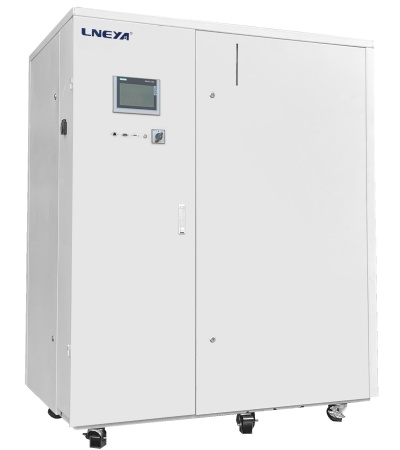
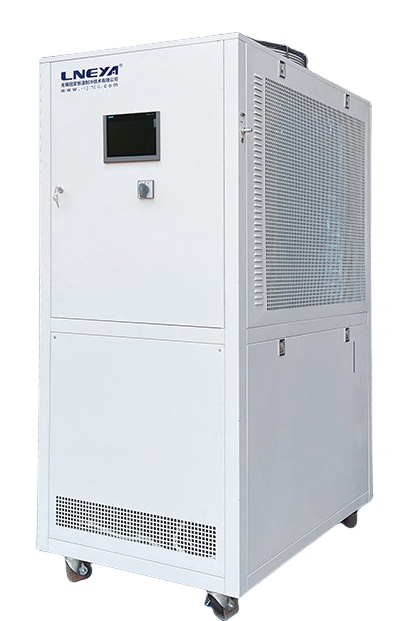
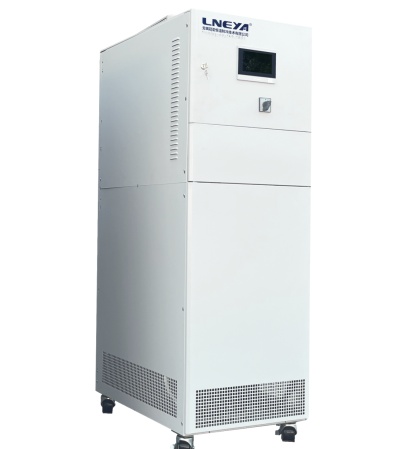
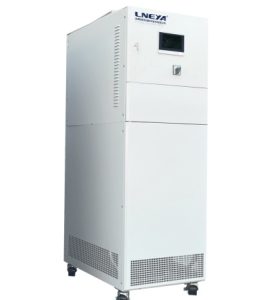
Lab Water Chillers: Essential for Precise Temperature Control
Lab water chillers are indispensable in scientific research and development laboratories for controlling the temperature of sensitive equipment and processes. These chillers ensure that the temperature remains stable within a narrow range, which is crucial for the accuracy and reliability of experimental results.
Key Features of Lab Water Chillers
Lab water chillers are designed with specific features to meet the demanding requirements of laboratory settings:
Wide Control Range: The ability to set a wide range of temperatures is necessary to accommodate various applications. Lab water chillers typically offer a control range from 5°C to 35°C, providing flexibility for different experiments and processes.
Eco-Friendly Refrigerants: To minimize environmental impact, lab water chillers use refrigerants that have low global warming potential. R-410a is a common choice due to its efficiency and environmental friendliness.
Intelligent Temperature Controllers: Advanced controllers allow for precise setpoint adjustments and monitoring of the chiller’s performance. Some controllers offer different modes, such as constant temperature mode and intelligent control mode, providing users with the ability to customize the cooling profile.
User-Friendly Interfaces: Features like easy-to-read level indicators and RS-485 Modbus communication capabilities make lab water chillers accessible and integrable with other laboratory systems.
Applications of Lab Water Chillers
Lab water chillers are used in a variety of applications within laboratories, including:
Rotational Evaporators: These devices are used for the concentration and purification of samples in chemistry and biology labs. A stable temperature is crucial for efficient evaporation and sample recovery. Vacuum Systems: Chillers help maintain a constant temperature during vacuum processes, which can be sensitive to temperature fluctuations. Spectrometers: In analytical chemistry, spectrometers require stable temperatures to ensure accurate spectral data. Bioreactors: For biological and pharmaceutical research, bioreactors need precise temperature control to simulate physiological conditions.
Market Outlook for Lab Water Chillers
The market for lab water chillers is growing due to increasing demand in research and development, as well as the need for more sustainable and efficient laboratory equipment. Companies like Thermo Scientific, Lytron, Grant Instruments, and JULABO are leading the market with their innovative products and commitment to sustainability.
Conclusion
Lab water chillers are essential for maintaining precise temperature control in laboratories. They are designed for accuracy, reliability, and ease of use, making them a critical component in scientific research and development. As technology advances and the demand for sustainable laboratory equipment grows, lab water chillers will continue to play a vital role in ensuring the integrity of experimental outcomes.
Nitrogen heating systems utilize nitrogen gas as a medium for heat transfer, offering precise temperature control in various industrial processes. These systems are known for their energy efficiency and eco-friendly operation, with applications ranging from oil shale mining to heat treatment and food packaging. The market for nitrogen gas heaters is experiencing robust growth, driven by the demand for sustainable heating solutions and the integration of advanced controls for real-time monitoring and predictive maintenance.
A 60 - ton air cooled chiller, with a cooling capacity of 720,000 BTUs per hour, is a mid - sized cooling solution suitable for various applications. This article delves into its fundamental aspects, starting with the basic concept and cooling capacity. It explains the vapor - compression refrigeration cycle driving its operation, elaborating on key components like scroll or reciprocating compressors, fin - and - tube condensers, and evaporators. Different types, including packaged and split systems, are compared, along with their applications in commercial buildings, industrial facilities, and data centers. The advantages, such as simple installation and low maintenance, and limitations, including higher energy consumption in hot climates, are analyzed. Additionally, selection criteria, installation requirements, and maintenance procedures are covered, providing a complete understanding of 60 - ton air cooled chillers.
A 1 hp glycol chiller is a specific type of cooling device with unique characteristics. This article offers a detailed exploration. It starts by defining what a 1 hp glycol chiller is, highlighting its power rating and use of glycol as a coolant. The working principle, involving the refrigeration cycle and the role of glycol in heat transfer, is explained. Applications range from small - scale industrial processes to laboratory equipment. The advantages, such as corrosion resistance and low - temperature performance due to glycol, are presented. Maintenance requirements, including glycol level checks and system inspections, and comparisons with other chillers are also covered, providing a complete understanding of 1 hp glycol chillers.
Cooler labs play a pivotal role in scientific research and industrial applications by providing precise temperature control for experiments and processes. This article offers an in - depth exploration of cooler labs, starting with an introduction to their fundamental functions. It details various cooling technologies employed, such as mechanical refrigeration, thermoelectric cooling, and cryogenic cooling, explaining their working principles and unique advantages. The article also covers key considerations for choosing lab coolers, including cooling capacity, temperature range, and compatibility with lab equipment. Additionally, guidance on installation, operation, and maintenance is provided, enabling researchers and lab technicians to optimize the performance of cooler labs for accurate and reliable results.
 Industrial Chiller Heater Equipment Supplier-LNEYA