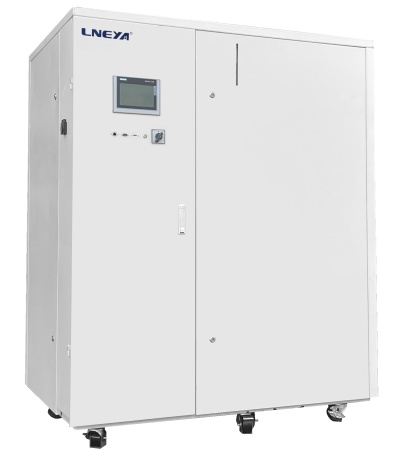
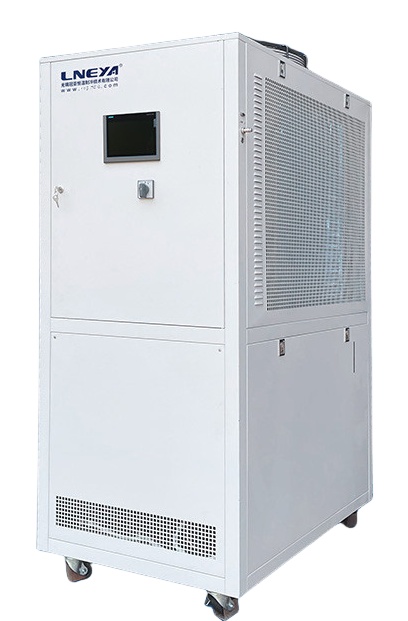
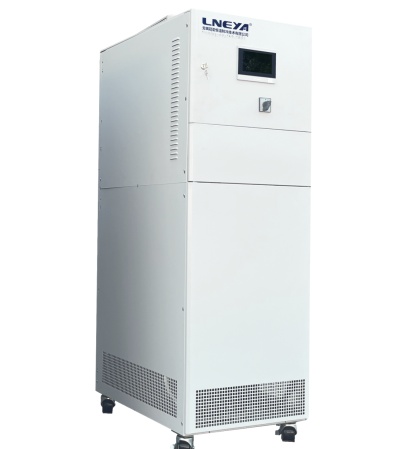
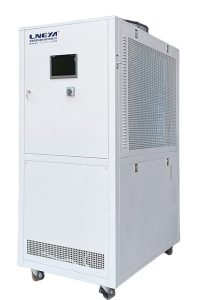
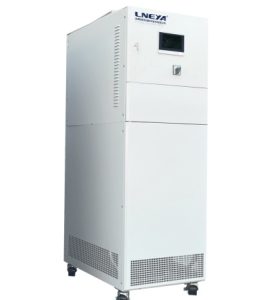
A 20 ton chiller is a versatile cooling system designed to handle moderate to high cooling loads, making it suitable for a wide range of applications where precise temperature control is essential. The term “20 ton” refers to its cooling capacity, with one ton of cooling equivalent to the heat required to melt one ton of ice in 24 hours, or 12,000 BTUs per hour. Thus, a 20 ton chiller can remove 240,000 BTUs of heat per hour, positioning it as a mid-range solution between smaller chillers (5-15 tons) and larger industrial units (30+ tons).
The applications of 20 ton chillers span various industries, each leveraging their capacity to meet specific cooling demands. In industrial manufacturing, they are commonly used in plastic injection molding facilities to cool molds for medium-sized production runs. The 20 ton capacity is sufficient to maintain stable mold temperatures (typically 10-60°C) for parts such as automotive components or consumer goods, ensuring consistent quality and reducing cycle times. They also find use in metalworking processes, cooling cutting fluids during machining operations to prevent tool overheating and maintain precision. Commercial facilities frequently utilize 20 ton chillers for HVAC systems in buildings such as medium-sized office complexes, hotels, and shopping malls. These chillers provide chilled water to air handlers, maintaining comfortable indoor temperatures for occupants. Their capacity is well-suited for spaces ranging from 20,000 to 40,000 square feet, depending on insulation, occupancy, and climate. Additionally, they are used in commercial kitchens to cool walk-in freezers, refrigeration units, and food processing equipment, ensuring food safety and compliance with health regulations.
The food and beverage industry relies on 20 ton chillers for processes like brewing, dairy processing, and beverage bottling. In breweries, they cool wort after boiling and maintain fermentation temperatures, critical for yeast activity and flavor development. Dairy plants use them to cool milk and dairy products rapidly, inhibiting bacterial growth and extending shelf life. Their capacity is ideal for small to medium-scale production lines, balancing cooling needs with energy efficiency. Healthcare and laboratory settings also benefit from 20 ton chillers. They cool medical imaging equipment such as MRI and CT scanners, which generate significant heat during operation. In research laboratories, these chillers maintain precise temperatures for incubators, spectrometers, and bioreactors, ensuring the accuracy of experiments and preserving sensitive samples. The reliable performance of 20 ton chillers is crucial in these environments, where temperature fluctuations can compromise results or patient care. 20 ton chillers are available in two primary types: air-cooled and water-cooled, each with distinct characteristics suited to different environments. Air-cooled 20 ton chillers dissipate heat using ambient air, drawn over condenser coils by fans. They are valued for their simplicity, as they do not require a cooling tower or separate water loop, reducing installation complexity and space requirements. This makes them ideal for facilities with limited outdoor space, such as rooftop installations in commercial buildings or compact industrial sites. Air-cooled models typically use scroll or screw compressors: scroll compressors offer quiet operation and high efficiency at part load, while screw compressors provide better performance for continuous, full-load operation. They are easier to maintain than water-cooled units, with fewer components to service, though regular cleaning of condenser coils is necessary to prevent dirt buildup from reducing efficiency. Water-cooled 20 ton chillers use water (often from a cooling tower) to dissipate heat, offering higher energy efficiency than air-cooled models—especially in warm climates. The lower condensing temperatures achieved with water cooling allow the compressor to operate more efficiently, reducing energy consumption. Water-cooled chillers are suitable for facilities where long-term operating costs are a priority, such as industrial plants with continuous cooling needs. They typically use screw or reciprocating compressors, with screw compressors favored for their durability and part-load efficiency. While they require additional infrastructure (cooling tower, water pumps, and treatment systems), their higher efficiency makes them cost-effective for large-scale or continuous operation.
Key features of 20 ton chillers vary by model but often include advanced controls for precise temperature regulation. Digital controllers allow users to set and monitor chilled water temperatures (typically 4-12°C) with accuracy within ±1°C, ensuring stability for sensitive processes. Many models include variable frequency drives (VFDs) for compressors and fans, adjusting speed to match cooling demand and reducing energy usage during partial load conditions. This not only lowers operating costs but also extends equipment lifespan by minimizing wear from frequent on/off cycles. Material construction is tailored to application needs. Chillers used in corrosive environments (e.g., chemical processing) feature stainless steel or titanium evaporators and condensers to resist degradation. Food-grade models may include sanitary fittings and smooth surfaces for easy cleaning, complying with FDA or EU food safety standards. Refrigerant type is another important feature: modern 20 ton chillers use low-global-warming-potential (GWP) refrigerants such as R-134a, R-454B, or R-513A, aligning with environmental regulations and reducing carbon footprints. When selecting a 20 ton chiller, several factors must be considered to ensure it meets specific application needs. Cooling load verification is critical: the chiller’s 20 ton capacity must match the heat load of the application, calculated based on factors such as the volume of the space or equipment, heat generated by processes, and ambient temperature. Oversizing can lead to inefficient operation (short cycling), while undersizing may result in insufficient cooling and equipment strain. Ambient conditions influence the choice between air-cooled and water-cooled models. Air-cooled chillers perform best in moderate climates, as high ambient temperatures (above 35°C) reduce their efficiency. Water-cooled chillers are more suitable for hot climates, as cooling towers can maintain lower condenser water temperatures, ensuring consistent performance. Facilities with access to a reliable water source and space for a cooling tower benefit more from water-cooled models, despite higher initial installation costs. Energy efficiency is a key consideration for long-term cost savings. The coefficient of performance (COP) and integrated part-load value (IPLV) are useful metrics: higher values indicate better efficiency. Air-cooled 20 ton chillers typically have a COP of 2.5-3.5, while water-cooled models range from 3.5-5.0, reflecting their superior efficiency. VFDs and energy-efficient compressors further enhance efficiency, making them worthwhile investments for applications with variable loads. Installation and space requirements must be evaluated. Air-cooled chillers need adequate clearance around the condenser for airflow (typically 3-5 feet) and are often installed outdoors or in well-ventilated mechanical rooms. Water-cooled chillers require space for the chiller unit itself, plus the cooling tower, pumps, and piping, making them better suited for facilities with dedicated mechanical areas or outdoor space for the tower. Maintenance needs vary by type but are essential for optimal performance. Air-cooled 20 ton chillers require regular cleaning of condenser coils to remove dirt, dust, and debris, which can block airflow and reduce heat transfer. This can be done with compressed air, a soft brush, or low-pressure water. Filters should be replaced periodically to prevent contaminants from entering the system. Water-cooled 20 ton chillers need maintenance of both the chiller unit and associated components. The condenser should be inspected for scaling or corrosion, with chemical cleaning performed as needed to maintain heat transfer efficiency. Cooling towers require regular water treatment to prevent biological growth (e.g., Legionella) and scaling, along with periodic cleaning of fill material and sump. Pumps and motors need lubrication and alignment checks to ensure smooth operation. Refrigerant levels should be monitored in all 20 ton chillers, with leaks repaired promptly to prevent efficiency loss and environmental harm. Compressor oil levels and quality should be checked, with oil changes performed according to manufacturer recommendations. Control systems, including sensors and thermostats, should be calibrated regularly to ensure accurate temperature regulation. In conclusion, 20 ton chillers are versatile cooling solutions, balancing capacity with efficiency to meet the needs of industrial, commercial, and institutional applications. Their availability in air-cooled and water-cooled models allows adaptation to diverse environments, while advanced features ensure precise temperature control and energy efficiency. By considering factors such as cooling load, ambient conditions, and maintenance requirements, users can select a 20 ton chiller that provides reliable performance, reduces operational costs, and supports the specific demands of their application.
The article provides an overview of flow chillers, focusing on their applications, technological advancements, and market trends. It highlights the importance of flow chillers in industries such as pharmaceuticals, chemical processing, and semiconductor manufacturing. The abstract summarizes the key points, including the versatility of flow chillers, their impact on process efficiency, and the growing demand for energy-efficient solutions in the market.
A water bath device is a versatile apparatus that uses water as a medium to control and maintain temperature for various processes. This article provides a detailed overview. It begins by explaining the basic principle of heat transfer in water bath devices, highlighting water's unique thermal properties. Then, it classifies water bath devices into different types, such as laboratory - use and industrial - grade, and describes their key components, including the water tank, heating/cooling elements, and temperature controllers. The article also explores a wide range of applications in laboratories, industries, and research. Additionally, it offers guidance on proper operation, maintenance, and troubleshooting, ensuring users can effectively utilize and maintain these devices for optimal performance.
A high temperature chamber is a specialized enclosure designed to create and maintain elevated temperature environments for various testing, research, and industrial processes. It operates by utilizing heating elements, insulation materials, and precise control systems to achieve and sustain desired high temperatures. Structurally, it comprises components like the chamber body, heating system, air circulation mechanism, and temperature control unit. Classified into different types based on size, temperature range, and application, it finds extensive use in materials testing, electronics, automotive, and aerospace industries. This article delves into its working principles, structural details, classification, applications, operation precautions, and future development trends, offering a comprehensive understanding of this essential thermal equipment.
The article delves into the role of metal chillers in various industrial applications, emphasizing their importance in heat treatment processes, induction heating systems, and environmental control. It discusses the market trends, technological advancements, and the impact of energy efficiency on the metal chiller industry. The abstract encapsulates the key points, including the significance of controlled cooling in metal manufacturing and the growing demand for sustainable cooling solutions.
 Industrial Chiller Heater Equipment Supplier-LNEYA