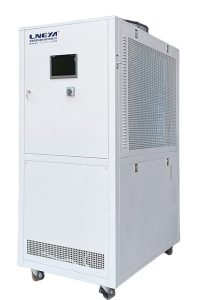
The temperature range in chiller systems is a vital factor that influences their performance and efficiency. It encompasses the set points for both chilled water and cooling water, which are essential for maintaining optimal conditions in various industrial and commercial processes.
Standard Temperature Ranges
Chilled Water Temperature Range: The standard temperature range for chilled water is between 7°C to 12°C (45°F to 54°F) as it leaves the evaporator, with a recommended temperature difference of 5°C (41°F) between the supply and return temperatures.
Cooling Water Temperature Range: For cooling water, the standard temperature range is between 30°C to 35°C (86°F to 95°F), with a corresponding wet-bulb temperature of 28°C (82°F). This range is crucial for assessing the efficiency of cooling towers and the overall performance of the chiller system.
Impact of Approach Temperatures
Approach temperature refers to the difference between the desired temperature and the actual temperature achieved by the chiller system. It is a key indicator of system efficiency:
Chiller Condenser Approach: The normal chiller condenser approach is below 4°C (7.2°F) for new chillers. A higher approach temperature can lead to poor chiller performance and increased power consumption.
Cooling Tower Approach: The cooling tower approach is typically designed to be below 2.8°C (5°F), which is the difference between the condenser water return temperature and the ambient wet bulb temperature.
Factors Influencing Temperature Range Selection
Several factors influence the selection of the appropriate temperature range for chiller systems:
Application Requirements: Different processes and applications have specific temperature requirements that must be met for optimal performance.
Energy Efficiency: Lower approach temperatures generally indicate better heat transfer and higher efficiency, but achieving these may come at the cost of increased energy consumption.
Environmental Conditions: Ambient temperature and climate conditions, such as wet-bulb temperature, play a significant role in determining the design temperatures for chiller systems .
Maintaining Optimal Temperatures
Maintaining the correct temperature range in chiller systems is crucial for various applications:
Industrial Processes: In industries such as plastics, pharmaceuticals, and food and beverage, precise temperature control is essential for product quality and process efficiency.
Data Centers: Chiller systems in data centers must maintain a specific temperature range to ensure the proper functioning of servers and IT equipment, affecting uptime and performance .
Conclusion
The chiller temperature range is a critical parameter that Directly affecting the efficiency and performance of the system。Understanding the standard temperature ranges and the impact of approach temperatures on system efficiency is essential for selecting and operating chiller systems effectively. By considering factors such as application requirements, energy efficiency, and environmental conditions, operators can maintain optimal temperatures for various applications, ensuring both efficiency and effectiveness in their processes.
Central chillers are essential for large-scale commercial buildings and industrial processes, providing cooling through a network of pipes. They come in various types, including air-cooled and water-cooled, with capacities ranging from hundreds to thousands of tons. These chillers play a vital role in managing temperatures for occupant comfort, equipment reliability, and critical processes. The market for central chillers is growing due to demand for energy efficiency and sustainability. Maintenance is key to their optimal performance, and advancements in technology are leading to smarter and more efficient chiller systems.
A closed-loop chilled water cooling system is a recirculating setup that uses coolant fluid to exchange heat from various processes. These systems are environmentally friendly, reducing water consumption and contamination. They operate by circulating chilled water through a building or equipment and a separate loop for heat rejection, typically using a cooling tower. This article delves into the operation, benefits, and components of closed-loop chilled water systems, providing insights into their efficiency and sustainability.
An 80 - ton air cooled chiller, boasting a cooling capacity of 960,000 BTUs per hour, is a robust mid - large - scale cooling solution. This article thoroughly explores its fundamental aspects. It begins with an explanation of the basic concept and cooling capacity, then details the vapor - compression refrigeration cycle that drives its operation. Key components, including scroll or reciprocating compressors, fin - and - tube condensers, and evaporators, are elaborated. Different types, such as packaged and split systems, are compared, along with their applications in commercial buildings, industrial plants, and data centers. The advantages, like easy installation and low maintenance, and limitations, such as reduced efficiency in high ambient temperatures, are analyzed. Additionally, selection criteria, installation, and maintenance procedures are covered for a complete understanding.
Industrial air chillers are vital in various industries for precise temperature control. This article first details their working principles, typically involving a refrigeration cycle to transfer heat from a process fluid to the ambient air. Different types, such as air - cooled and water - cooled chillers, are explained, highlighting their unique features and applications. Their significance in industries like manufacturing, food and beverage, and pharmaceuticals is explored, where they ensure product quality and equipment functionality. Maintenance aspects, including regular checks of components and refrigerant levels, are covered. The article also looks at future trends, such as energy - efficiency improvements, to provide a complete understanding of industrial air chillers.
 Industrial Chiller Heater Equipment Supplier-LNEYA